Two Summer Wagashi from 7-Eleven Japan That’ll Make You Rethink Convenience Store Sweets
You probably already know that Japanese convenience stores are stocked with amazing food — but have you ever looked at the wagashi section? I’m talking traditional Japanese sweets, sitting right there next to the onigiri and sandwiches, and honestly they’re better than you’d expect. Today I want to share two from 7-Eleven’s Wamocchi Series that I’ve been loving lately.
What Is Wagashi?
Wagashi (和菓子) is traditional Japanese confectionery made from natural ingredients like rice, beans, and plants. It’s generally less sweet than Western desserts, and uses flavors like matcha, azuki bean, and yomogi. One of the great joys of living in Japan is finding genuinely high-quality wagashi at a convenience store — no specialty shop required.
Mizu Manju: The Cool, Jiggly Summer Sweet
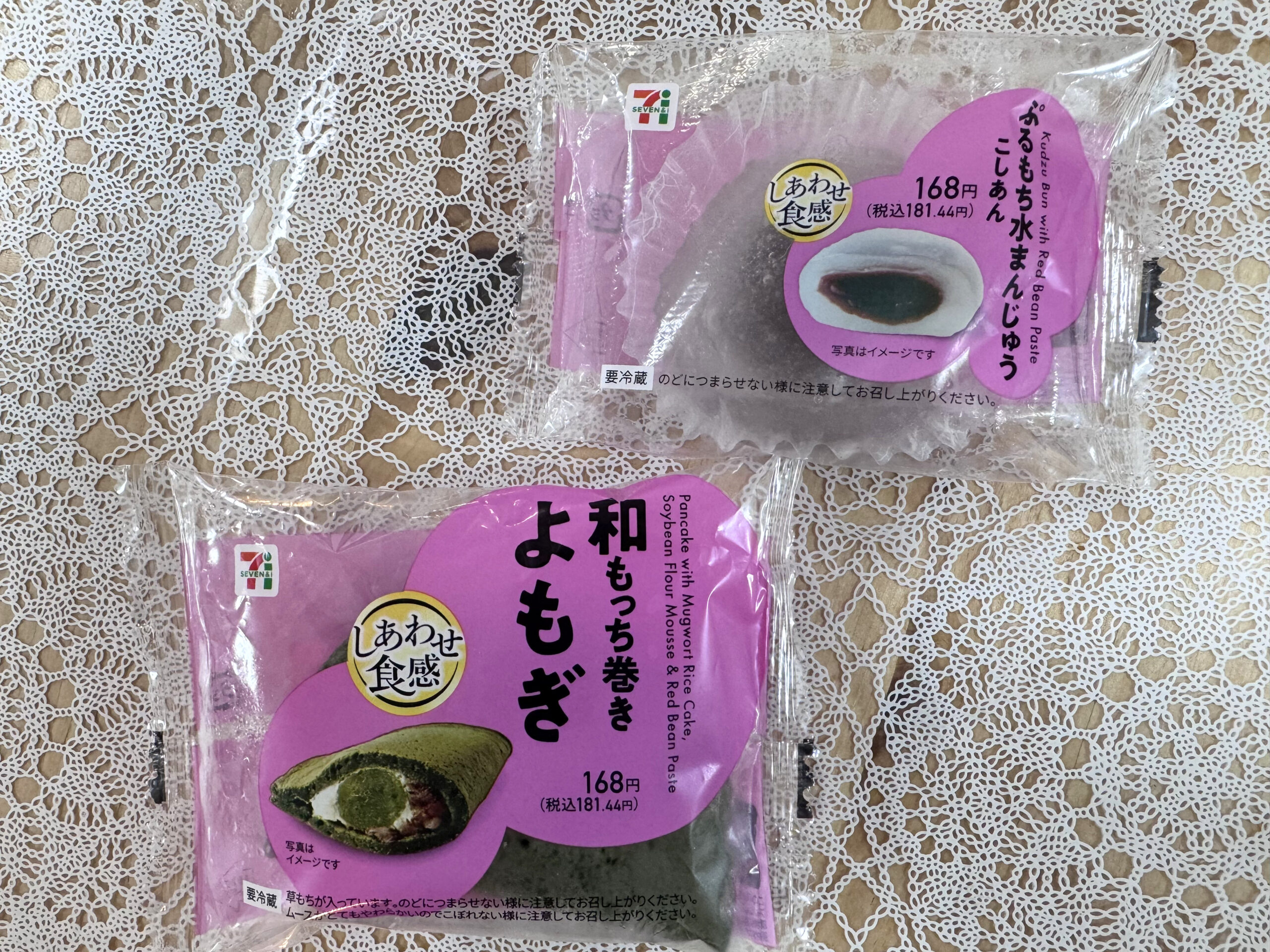
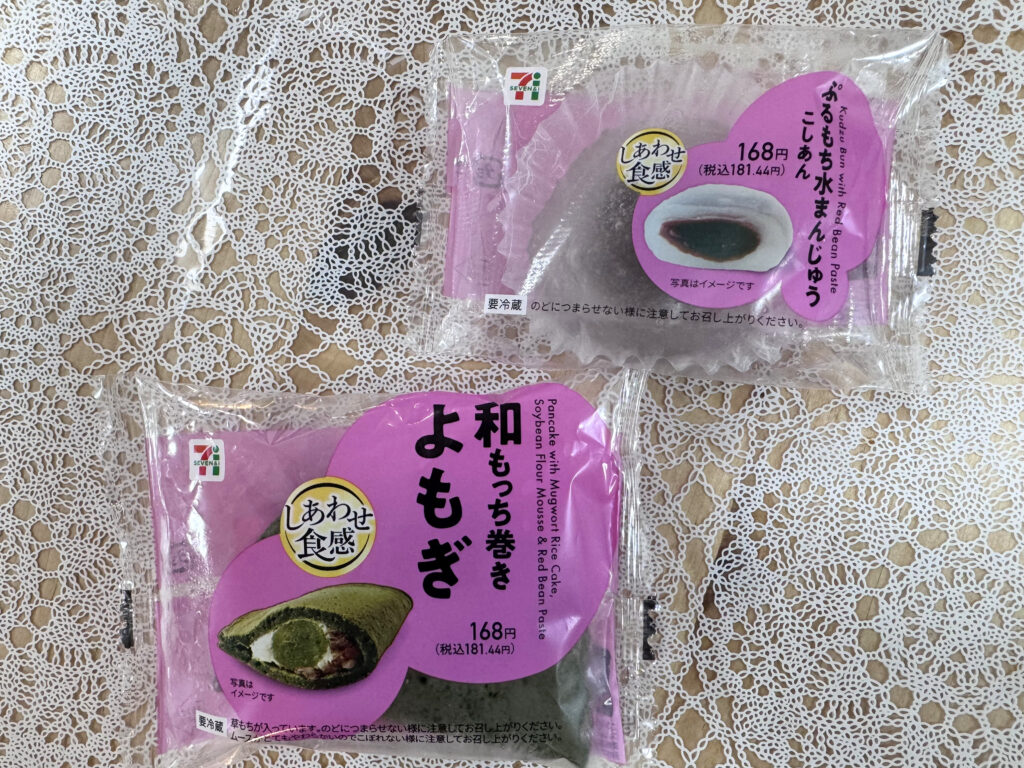
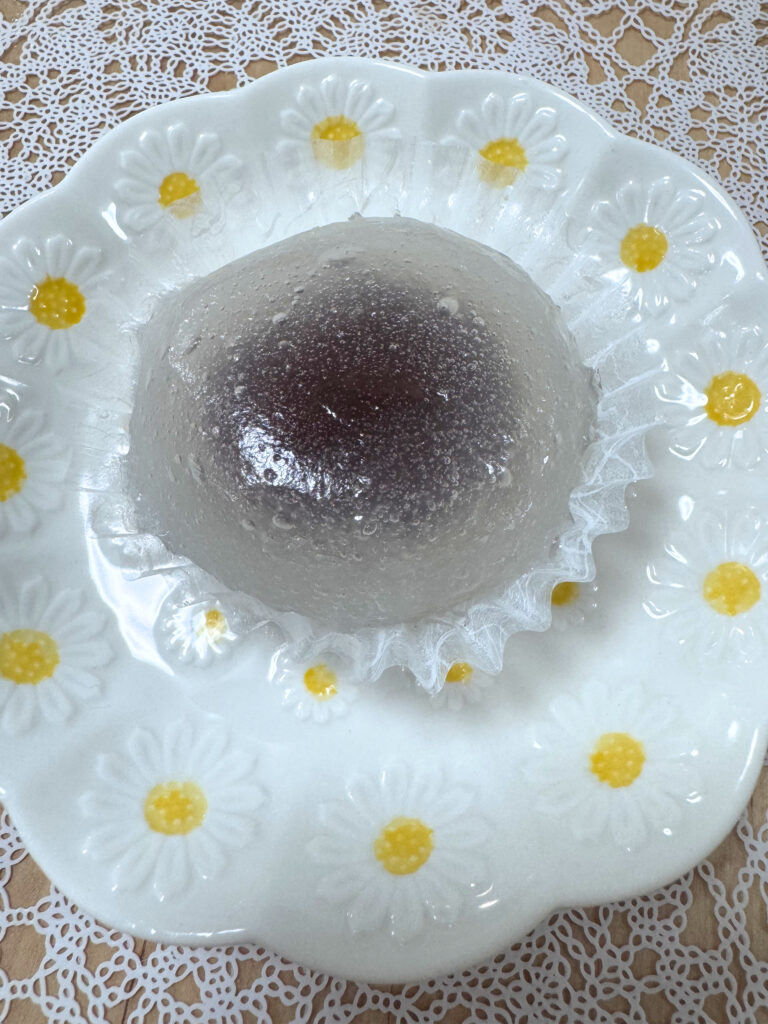
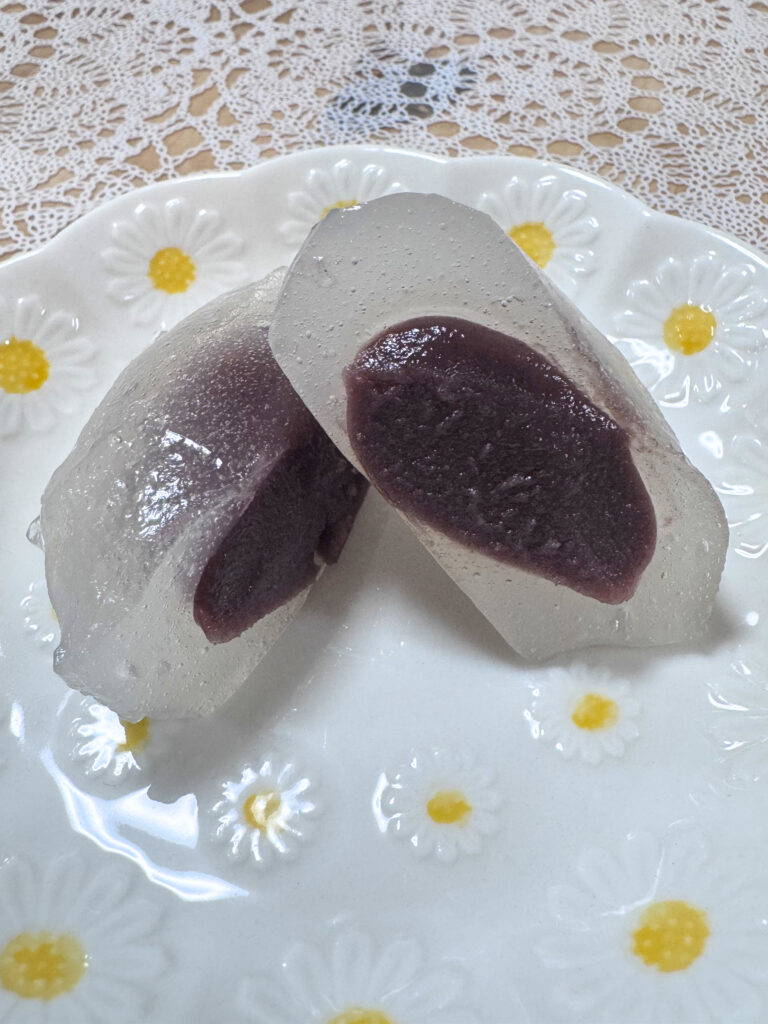
The first one is a mizu manju (水まんじゅう). It’s made with kuzu starch (葛粉), which gives it this incredibly bouncy, wobbly texture — it’s cool, silky, and practically melts on your tongue. Inside is smooth koshi-an (strained red bean paste) that’s refined and gently sweet. Not overpowering at all. The kind of sweetness where you suddenly realize you’ve eaten three of them without noticing.
Since it’s served cold, it’s the perfect summer treat. On a hot Nagoya day, this little jelly sweet is exactly what you need.
Wamochimaki Yomogi: The Dorayaki Packed with Flavor
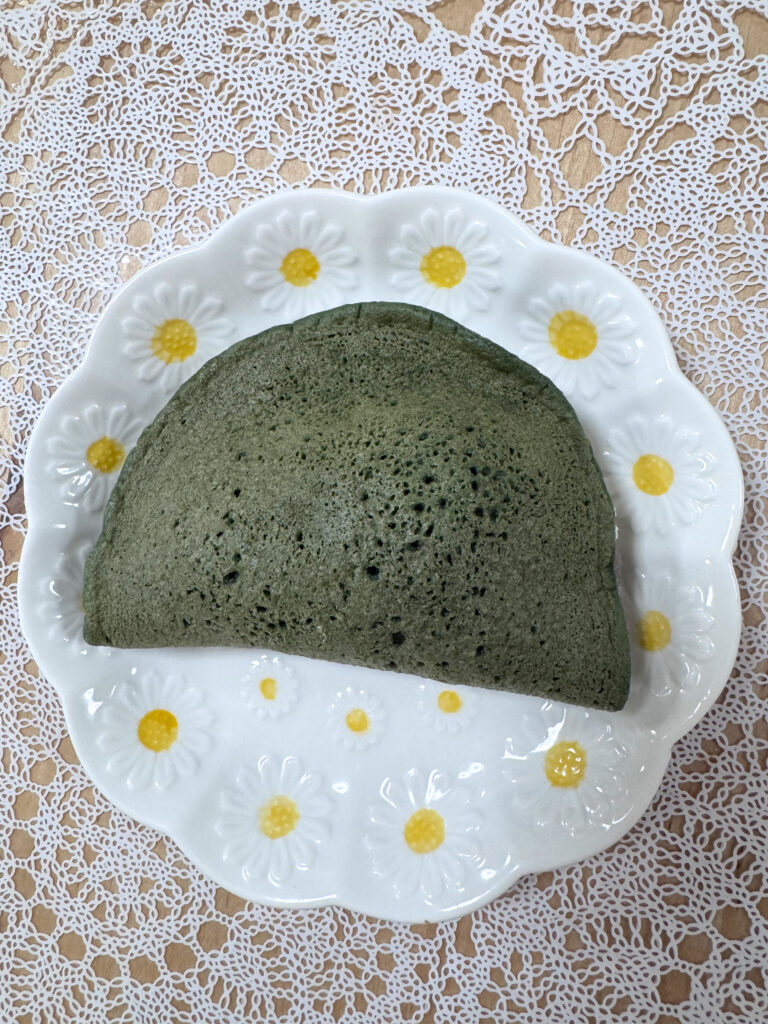
The second one is the Wamochimaki Yomogi (和もっちまき よもぎ). Despite the “mochi” in the name, this is actually a type of dorayaki — two soft, chewy layers sandwiching a filling.
A quick note on yomogi: it’s a plant that’s grown wild in Japan for centuries, known in English as Japanese mugwort. It has a distinctive earthy, grassy fragrance and is a classic ingredient in traditional Japanese sweets like kusa mochi. That beautiful green color you see in wagashi? That’s yomogi!
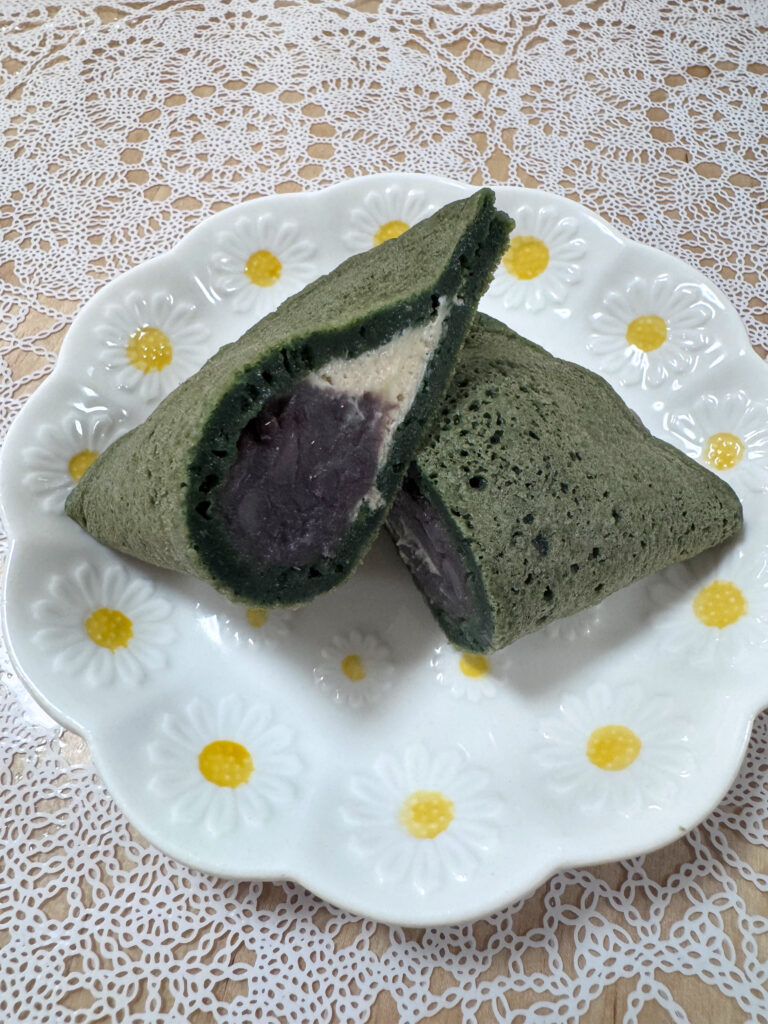
The batter here is packed with yomogi, so the flavor comes through strongly. The texture is wonderfully chewy and substantial. Inside, there’s coarse red bean paste, kusa mochi, and a kinako (roasted soybean flour) mousse — a combination that somehow just works perfectly, with different textures and flavors in every bite.
My Honest Take
Both are surprisingly small, but one piece is genuinely satisfying. At 181 yen each (tax included), they’re great value — light enough to enjoy as an after-dinner dessert or alongside a cup of Japanese tea at snack time.
One small heads-up though: the chewy texture and mochi filling mean small children and elderly family members should take their time eating these. Better safe than sorry!
These are convenience store sweets you really can only find in Japan. If you get the chance, definitely give them a try 😀