Only in Japan Words #1 — 豆腐メンタル (Tofu Mental) 🍳
Have you ever heard a word so perfectly Japanese that it made you smile? Welcome to Only in Japan Words — a series where I introduce unique Japanese slang, internet words, and expressions born from manga, anime, and everyday Japanese culture. These are words you’ll never find in a textbook! 😄
What Does 豆腐メンタル Mean?
豆腐メンタル (Tofu Mental) describes someone whose mental strength is as fragile as tofu — one small push, one little criticism, and they completely crumble. 😂 Sound familiar?
In English, you might say someone is “sensitive” or has a “glass heart,” but tofu mental is so much more visual — and honestly, so much cuter. Tofu is soft, delicate, and falls apart if you handle it wrong. That image is just perfect for this kind of personality.
Where Did This Word Come From?
This expression has its roots in Yu-Gi-Oh! — specifically a character known for being mentally fragile. But it really took off when Japanese internet culture adopted it as a relatable, self-deprecating label. People started using it to describe themselves online: “I’m such a tofu mental person — I cried at a dog food commercial.”
Unlike the English word “sensitive,” which can sometimes feel like a criticism, 豆腐メンタル has a gentle, almost affectionate quality to it. People use it about themselves with a little laugh. It acknowledges a real personality trait without being harsh about it.
How Do You Use It?
“私、豆腐メンタルだから…” (Watashi, tofu mental dakara…) — “I’m such a tofu mental person, so…” (Said before admitting something emotionally fragile)
“あの子、豆腐メンタルだよね。” (Ano ko, tofu mental da yo ne.) — “That person has such tofu mental, right?” (Affectionately describing a sensitive friend)
“ちょっとしたことで豆腐みたいに崩れる。” — “I crumble like tofu at the smallest things.” (Self-deprecating humor about being emotionally sensitive)
The Opposite: 鋼のメンタル (Hagane no Mental)
Of course, if tofu mental is the fragile end of the spectrum, the opposite is 鋼のメンタル — “steel mental.” Someone with 鋼のメンタル doesn’t get rattled by criticism, disappointment, or setbacks. They just keep going.
Japanese internet culture loves this contrast. People half-jokingly aspire to 鋼のメンタル while fully identifying as 豆腐メンタル. It’s a relatable way of saying: “I wish I were tougher, but honestly, I’m just soft and that’s who I am.”
Other Fun “Mental” Expressions in Japanese
The “food + mental” pattern has inspired a whole family of expressions in Japanese slang. Here are a few others you might hear:
ガラスのメンタル (Glass Mental) — Similar to tofu mental, but with a sharper image. Glass shatters suddenly and completely, so glass mental describes someone who breaks dramatically when things go wrong. A bit more intense than tofu mental.
もやしメンタル (Bean Sprout Mental) — Even more delicate than tofu! Bean sprouts are thin, fragile, and wilt almost immediately under pressure. This one is used for people who are extremely sensitive to stress or conflict.
岩のメンタル (Rock Mental) — Somewhere between tofu and steel. A rock isn’t as strong as steel, but it’s solid and stable. Used to describe someone who isn’t flashy but is quietly reliable and hard to shake.
Why This Expression Resonates So Much
I think 豆腐メンタル became so popular because it gives people language for something they already felt but couldn’t name. Being emotionally sensitive in Japan — a culture that prizes composure and not showing too much — can feel like a private struggle. Having a funny, food-based word for it makes it lighter. Easier to admit. Easier to laugh about.
And maybe that’s a better way to think about sensitivity in general. Not a weakness — just something that needs a little extra care. Tofu isn’t a bad ingredient. It’s soft, it’s nourishing, it’s delicious. It just needs to be handled gently. 🍳
🍽️ My Favorite Tofu, Since We’re on the Subject
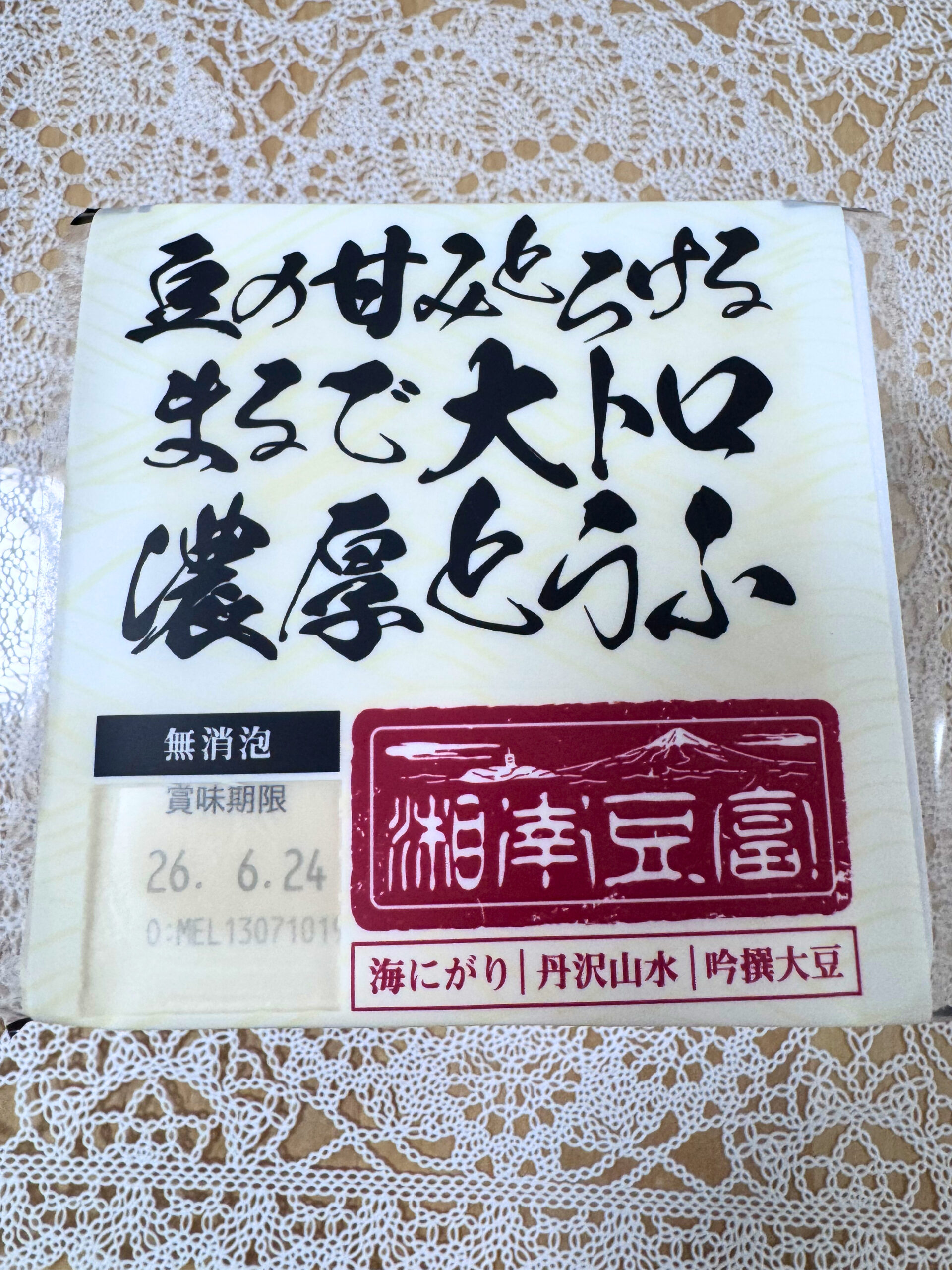
Since we’re talking about tofu — I have to mention my current obsession: the 大トロ豆腐 (Otoro Tofu) by 湘南豆腐 (Shonan Tofu). The name says it all. “Otoro” is the fattiest, most prized cut of tuna, and this tofu earns that name. The soybean flavor is rich and pronounced in a way that most tofu just isn’t — you can actually taste the sweetness of the beans.
Now, tofu is incredibly versatile. You can pan-fry it, simmer it in a hot pot, add it to miso soup — it’s delicious in all of those ways. But this particular tofu? I think the best way to eat it is the simplest: straight out of the package, with just a drizzle of mentsuyu (Japanese noodle dipping sauce) over the top. That’s it. No heat, no fuss. The tofu is so good on its own that cooking it almost feels like a waste.
If you’re in Japan and want to try it, look for it at any large supermarket — most carry it. It’s usually in the premium tofu section, and once you spot that “大トロ” label, you’ll know you’ve found it.